Hospital Life
Even though the Mercy Sisters had left their larger communities of Baltimore, New York, and Pittsburgh at different points in the war, they were united in their “yes” and their pursuit of God’s will. In hearing the cries of the poor, they could not ignore the opportunity to help as they knew best; and so, they took to prayer the questions of “where” and “how” as they discerned where they were needed and how they could serve. No doubt there was an element of fear in changing residences or the threat of contracting diseases, but they trusted in their Lord and the path He had set before them. Ultimately, the place where the religious sisters could be most useful was the hospital, and it was there that they gave their blood, sweat, and tears.
Beginning in the 1850s, the Baltimore Sisters of Mercy, who were originally members of the Pittsburgh community, had been staffing Washington Infirmary, but at the start of the Civil War, they offered the hospital to the government. After an unexpected fire in November 1861, the Infirmary burned down, and in lieu of rebuilding, Douglas Military Hospital was formed by converting the homes of Senator Stephen A. Douglas of Illinois, Vice President John C. Breckinridge of Kentucky, and Senator Henry Rice of Minnesota. As the past superioress of Washington Infirmary, Sister Mary Collette O’Connor and her nurses were asked to manage Douglas Hospital on December 23, 1861. Known for her “remarkable executive ability and tender heart,” Mother O’Connor was held in high regard by the surgeons, but the “grueling work” of nursing weakened her health and she died on July 16, 1864.[9]
As the war waged on and the sick and injured kept increasing in numbers, the War Department contacted the Sisters of Mercy in Pittsburgh to send 8 sisters to Stanton Military Hospital in late 1862. According to the convent’s annals, the Sister-Nurses were “placed in charge of 130 soldiers from the front” on November 26, 1862.[10] However, by December 1862, following the Battle of Fredericksburg, “over 500 wounded from both armies lay side by side in the hospital wards.” Located across the street from Douglas Hospital, as annotated in Figure 2, Stanton was the more spacious of the two hospitals. Consequently, due to its larger size, 9 more religious sisters, trained at the Pittsburgh Mercy Hospital, were beckoned as the “casualties poured in.”[11]
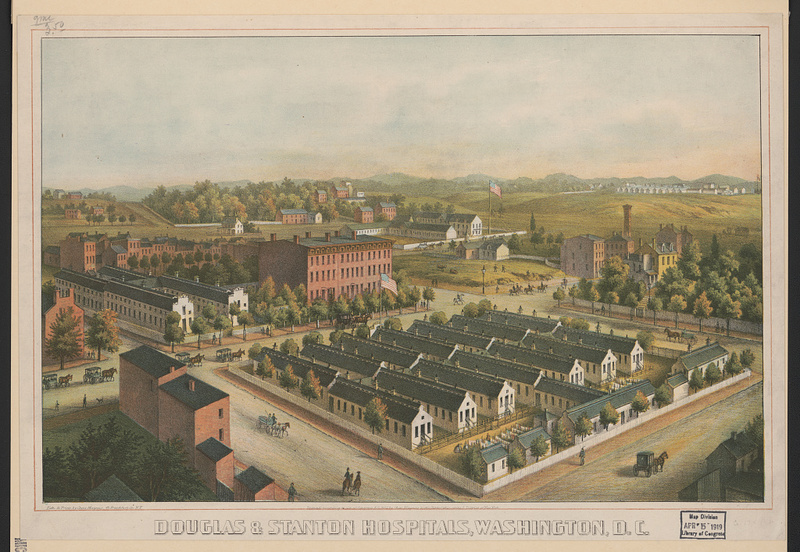
Figure 2. Bird's eye view of Douglas and Stanton Hospitals in Washington, D.C. (Courtesy of the Library of Congress)
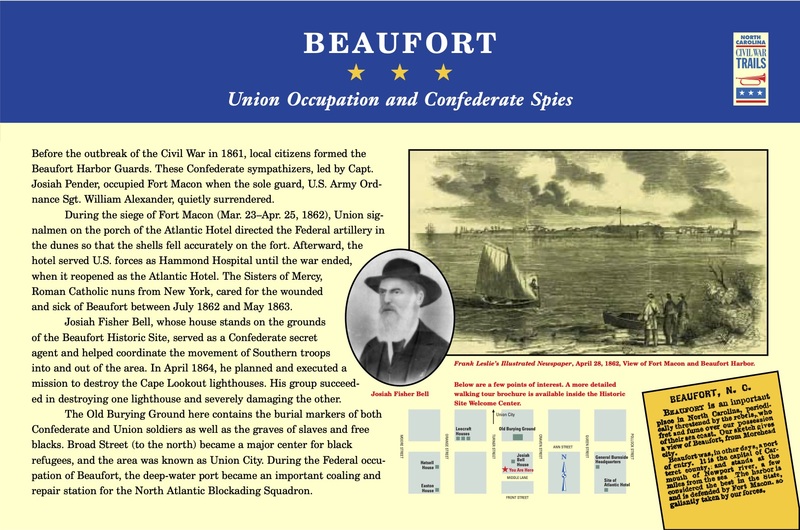
While the Mid-Atlantic hospitals were filling to capacity in 1862, the New York City community was approached about sending Sister-Nurses to the Southeastern port of Beaufort, NC. Directed to Hammond Hospital, in what had once been the Atlantic Hotel featured in Figure 3, the Mercy Sisters arrived in their black habits, and because the patients had never seen a Catholic nun before, the sisters were thought to be “widows looking for their dead husbands.”[12] Nonetheless, the Sisters of Mercy were not deterred by the filth and dried blood that they found in the Union-occupied building and proceeded to care for the sick and wounded men. As heard in Figure 4, the New York Sister-Nurses are recognized for their medical work in North Carolina hospitals between July 1862 and May 1863.
[9] "Sisters in the East.” Civil War Sisters. https://civilwarsisters.com/grid-page/sisters-in-the-east/. Accessed 19 Mar. 2021.
[10] Eulalia, Mary. “The Work of the Sisters of Mercy in the United States Pittsburg: 1843 to 1921.” p. 166.
[11] "Sisters in the East.” p. 2.
[12] "Sisters in the East.” p. 2.