Habits of Mercy & Charity
Due to their charitable deeds during the Civil War, many women religious communities were considered to be part of the same order. Even though the religious sisters wore unique habits for their respective congregation, they were often grouped together and mistakenly called “Sisters of Charity” or “Sisters of Mercy” by the people they served.
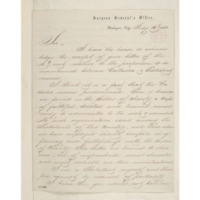
One historical example of this inaccurate labeling is apparent in the Figure 2 correspondence of Surgeon General William A. Hammond to President Abraham Lincoln on July 16, 1862. Responding to Lincoln’s concern about the disproportionate amount of Catholic nurses in the hospitals, Hammond praises the work ethic of the Catholic Sisters and believes them to be more efficient and valuable than the Protestant nurses. Nevertheless, he also refers to the nurses as Sisters of Charity, which given the employment of other women religious communities throughout the country was not entirely true.
As most of the Sister-Nurses were adorned in dark dresses with an accompanying veil or headpiece that covered their hair, it was easy to confuse them. However, when taking a closer look, it’s possible to distinguish between the different orders based on some distinctive parts of their habits.
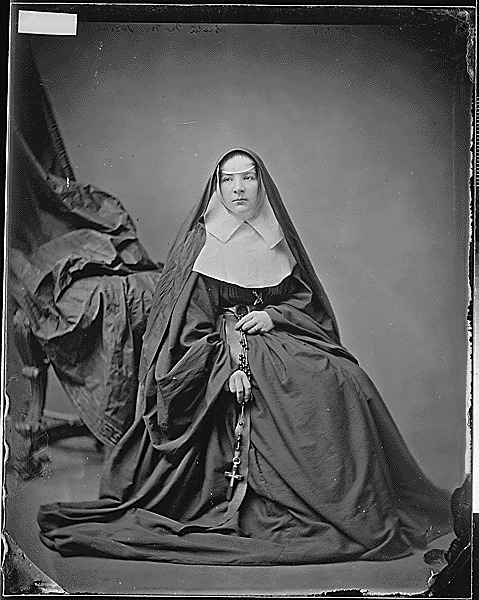
Figure 3. Full-length portrait of a seated Sister of Mercy, as photographed by Mathew Brady. (Courtesy of the National Archives)
In Figure 3, Sister Mary Madeleine Tobin, incorrectly identified as Sister M. M. Joseph, is facing left and is holding her rosary beads. This portrait by Civil War photographer Mathew Brady has been annotated to point out the parts of the Sister of Mercy’s habit. According to the Australian Dress Register,[2] the “Mercy habit was designed by the Foundress of the Sisters of Mercy, the Venerable Mother Catherine McAuley, in Dublin in 1831, and, with possibly only minor and inconspicuous alterations, was worn by all Sisters of Mercy until the middle of the twentieth century.” While the cincture, crucifix, and rosary beads were fastened around the waist and were common features of every community’s habits, the Sisters of Mercy had a special headdress. Comprised of a dimity, coif, and guimp, the three pieces of fabric formed the white headdress that covered her forehead, chest, and shoulders, and was worn beneath the sister’s black veil. In addition to having long sleeves, a Sister of Mercy’s black dress was also pleated and had a train.
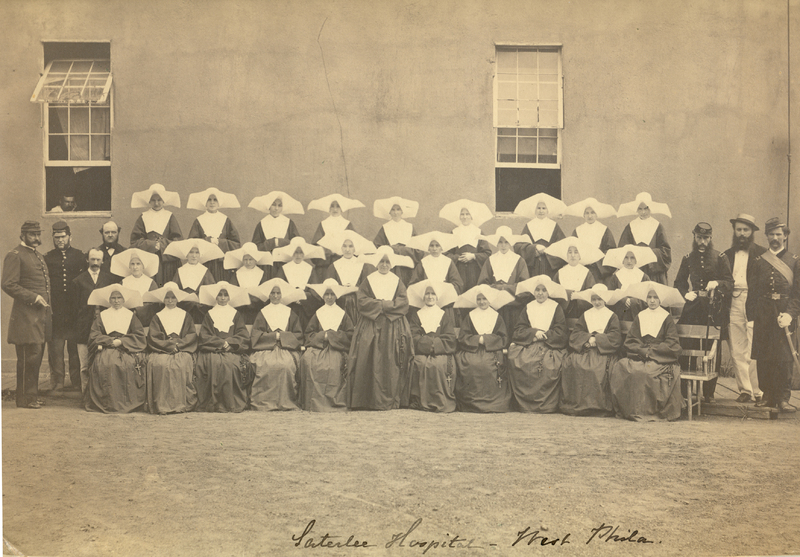
Figure 4. Group portrait of the 29 Daughters of Charity nurses who served at Satterlee Hospital. They are pictured with 4 Union servicemen in uniform, 3 male staff members, and 1 patient in the window. (Courtesy of Daughters of Charity, Province of St. Louise Archives)
When comparing the habit of the Sisters of Mercy to the habit of another women religious community such as the Daughters of Charity, the first contrast that is observed is the white, starched headpiece known as a cornette. Resembling a pair of wings, the cornette was the “most recognizable mark of a Daughter of Charity” and, similar to a veil, shielded the heads of these religious sisters from 1685 until 1964.[3] As shown in Figure 4, the cornette appears to be a hat, but instead of wearing black dresses, the photographed Daughters of Charity have on blue dresses, in keeping with their community’s devotion to the Virgin Mary.[4] Like the Mercy Sisters, the Daughters of Charity also wore a white guimp as a collar and breastplate but it did not cover their shoulders.
[2] "A Religious Habit of the Sisters of Mercy.” Australian Dress Register. 31 Oct. 2014, https://australiandressregister.org/garment/545/. Accessed 2 Apr. 2021.
[3] "History.” Daughters of Charity: Province of St. Elizabeth Ann Seton. 26 Mar. 2021, https://www.daughtersofcharity.com/who-we-are/history/. Accessed 18 Apr. 2021.
[4] "Do the Daughters of Charity Still Wear a Habit?” Daughters of Charity Provincial Archives. 30 Jun. 2014, https://docarchivesblog.org/2014/06/30/do-the-daughters-of-charity-still-wear-a-habit/. Accessed 18 Apr. 2021.